Table of Contents
Long-Lasting Home Interior Materials play an important role in creating a beautiful, comfortable and durable living space. Designing a beautiful home is not just about choosing attractive colours, furniture and decorations. The materials used in your interiors determine how comfortable, durable and easy to maintain your home will be over time.
From flooring and kitchen cabinets to wardrobes and wall finishes, every material should be selected according to its purpose. A stylish material may look impressive in a showroom, but it may not be the right choice for everyday use.
If you are planning a new home or renovating your existing space, here are 9 important factors to consider when selecting materials for long-lasting home interiors.
1. Understand the Purpose of Each Space
Before choosing materials, consider how each room will be used. Different spaces have different requirements.
- Bedroom: Consider warm textures, quality wardrobe materials and finishes that create a relaxing atmosphere.
- Kitchen: Select moisture-resistant cabinet materials, durable countertops and easy-to-clean surfaces.
- Bathroom: Use water-resistant materials, anti-skid flooring and fittings suitable for regular moisture exposure.
- Dining area: Choose stain-resistant surfaces and furniture that can handle everyday use.
Understanding the purpose of each space helps you select materials that combine functionality and appearance.
2. Choose Durable Materials for Furniture
Furniture is one of the most important investments in home interiors. Selecting suitable materials can help reduce frequent repairs and replacements.
Plywood is commonly used for wardrobes, kitchen cabinets and custom furniture. The appropriate plywood grade should be selected based on the location and moisture exposure.
MDF is useful for smooth painted finishes and decorative designs in suitable dry areas. Solid wood can provide strength and a natural appearance when properly selected and maintained.
Always check the material grade, thickness, quality and suitability before finalising your furniture.
3. Select the Right Flooring Material
Flooring experiences regular foot traffic, furniture movement and cleaning. Therefore, it should be selected based on durability, comfort and maintenance requirements.
Some popular flooring options include:
- Vitrified tiles: Suitable for many living spaces because they are available in different colours, patterns and finishes.
- Granite: A durable natural stone option for areas that require a strong surface.
- Marble: Creates an elegant appearance but may require regular care and maintenance.
- Wooden flooring: Adds warmth and character, but the product should be suitable for the room’s moisture conditions.
For bathrooms and balconies, consider anti-skid finishes to improve safety.
4. Pay Attention to Kitchen and Bathroom Materials
Kitchens and bathrooms are regularly exposed to water, heat, steam and cleaning products. Choosing materials without considering these conditions can lead to swelling, staining, corrosion or surface damage.
For kitchen cabinets, consider suitable moisture-resistant boards with properly finished edges. Quartz and granite are popular countertop options, depending on the design and maintenance requirements.
For bathrooms, select suitable tiles, water-resistant surfaces and corrosion-resistant fittings. Proper waterproofing and installation are equally important for long-term performance.
5. Choose Finishes That Are Easy to Maintain
The surface finish affects both the appearance and maintenance of your interiors.
Laminate finishes are available in various colours, textures and patterns. They are a practical option for many wardrobes and cabinets.
Acrylic finishes offer a smooth, glossy appearance, while wood veneer provides a natural wood texture. PU finishes can create a refined painted look.
Before selecting a finish, consider fingerprints, scratches, stains, cleaning requirements and the possibility of future repairs.
6. Consider Climate and Moisture Conditions
Climate plays an important role in material selection, especially in humid and coastal locations such as Pondicherry.
Moisture can affect furniture boards, wall finishes and metal fittings if unsuitable materials or poor installation methods are used.
Choosing materials according to local environmental conditions can help improve their service life.
7. Balance Quality and Budget
A low-cost material may appear attractive initially, but frequent maintenance or replacement can increase the overall expense.
Instead of focusing only on the purchase price, compare the expected lifespan, installation cost, maintenance requirements and repair possibilities.
Invest in better-quality materials for frequently used areas such as kitchen cabinets, wardrobes, flooring and door hardware. For decorative elements, you can explore budget-friendly alternatives without compromising the overall design.
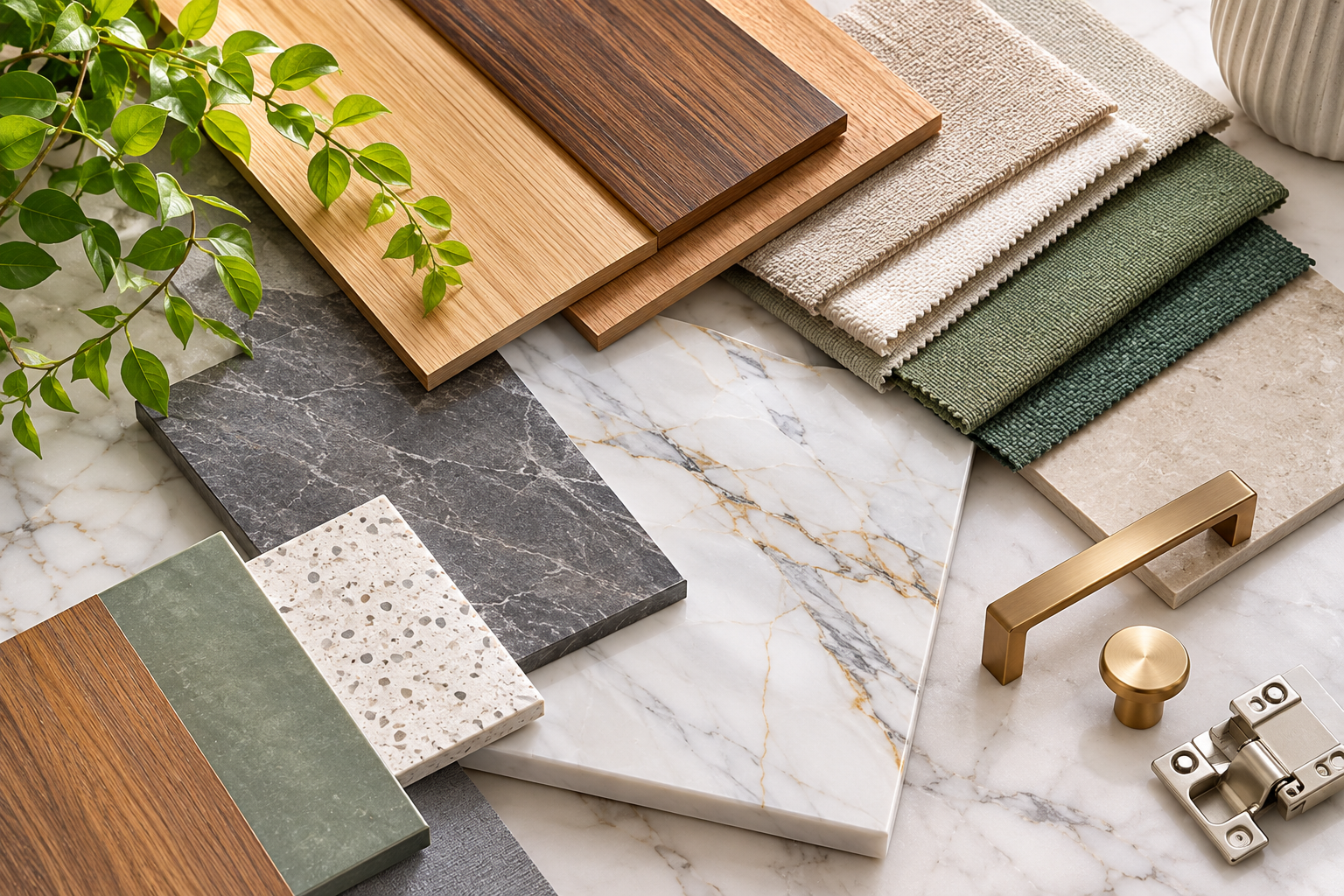
8. Check Material Samples Before Finalising
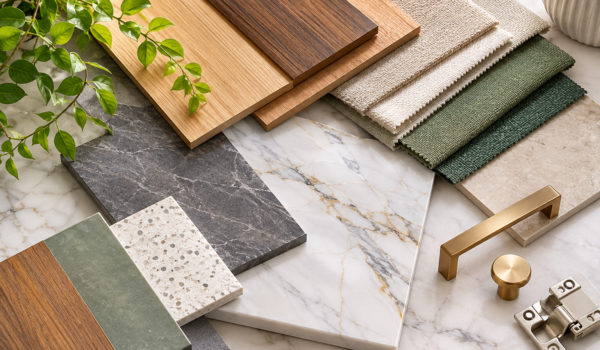
Never select materials based only on catalogue photographs or online images. Request physical samples and examine them under natural and artificial lighting.
Check the colour, texture, thickness, finish and overall quality. You can also compare multiple samples to understand how they work together.
Ask your interior designer or contractor about the brand, grade, specifications and installation process. Make sure the agreed material details are clearly mentioned in the quotation.
9. Focus on Proper Installation and Maintenance
Even high-quality materials may not last long if they are installed incorrectly.
Proper measurements, surface preparation, edge sealing, suitable adhesives and professional workmanship all contribute to better results.
Regular cleaning and timely maintenance also help protect furniture, flooring and other interior surfaces. Follow the manufacturer’s care instructions to avoid damaging the finish.
Conclusion
Selecting the right materials is one of the most important steps in creating beautiful and long-lasting home interiors. By considering durability, functionality, climate, maintenance and budget, homeowners can make better decisions for every room.
A well-designed home should not only look attractive on the day it is completed but should also remain comfortable and practical for years to come.
Barani Interiors believes that thoughtful material selection and quality workmanship are essential to creating functional, elegant and lasting interior spaces. Plan your interiors with the right materials and build a home that you will enjoy for years.