Table of Contents
In today’s fast-paced world, many homeowners are searching for interior styles that bring calmness, clarity, and balance into their everyday lives. Among modern design trends, Asian Zen interior design has become one of the most loved styles for creating peaceful, natural, and harmonious living spaces. Inspired by ancient Asian philosophies and simplified Japanese aesthetics, Zen design transforms homes into serene sanctuaries—places that support relaxation, mindfulness, and emotional well-being.
Whether you want to redesign your living room, bedroom, or your entire home, this guide explores everything you need to know about Asian Zen interiors, including key characteristics, color palettes, materials, layouts, and décor ideas. Let’s dive into how you can bring timeless Zen elegance into your modern home.
What Is Asian Zen Interior Design?
Asian Zen interior design is a style inspired by the principles of Zen Buddhism, Japanese minimalism, and Asian natural living philosophies. The theme focuses on creating a balanced home environment using:
- Simplicity
- Natural materials
- Calm color schemes
- Clean, open layouts
- Nature-inspired elements
The goal of Asian Zen design is not only aesthetics—it’s about creating a home that feels peaceful, intentional, and emotionally comforting. In a Zen-inspired home, every object has a purpose, every space feels open, and every element encourages relaxation.
Key Principles of Asian Zen Interiors
To fully understand the style, it’s important to explore the principles that shape Zen design.
1. Simplicity Above All
The core idea of Zen design is “less is more.”
Spaces remain uncluttered, open, and free from unnecessary objects. Furniture has clean lines, natural forms, and minimal detailing. The overall environment feels breathable and spacious.
2. Nature as the Heart of the Home
Asian Zen design brings nature indoors. Natural materials and organic elements are used to create grounding, earthy, and calming spaces.
This includes:
- Wood
- Bamboo
- Stone
- Rattan
- Clay
- Linen
- Jute
These natural materials enhance comfort and create a strong connection between the indoors and outdoors.
3. Balance & Harmony
Zen style is strongly influenced by Feng Shui, a Chinese philosophy that focuses on balancing energy flow (Qi). Good Feng Shui helps your home feel peaceful, well-arranged, and emotionally uplifting.
4. Soft & Ambient Lighting
Zen interiors avoid harsh artificial lighting. Instead, they use:
- Warm LED lights
- Lantern-style lamps
- Floor lamps
- Window light
- Hidden cove lighting
The lighting should feel soft, diffused, and warm—like a quiet sunrise.
Best Color Palette for Asian Zen Interiors
Color plays a powerful role in creating Zen environments. The right palette helps create a restful atmosphere. Zen interiors mainly use earthy and natural tones, especially:
- Warm beige
- Soft white
- Light grey
- Brown wood tones
- Muted greens
- Earthy terracotta
- Sandy neutrals
These shades mimic nature and help create visual harmony.
Essential Elements of Asian Zen Interior Design
Let’s look at the design features that make Zen interiors truly unique.
1. Natural Materials for Texture & Warmth
Using natural materials adds authenticity and depth to Zen-inspired spaces.
Popular materials include:
- Bamboo: flooring, furniture, partitions
- Light wood: Japanese-style low tables, wall panels
- Stone: bathroom décor, countertops
- Rattan & wicker: seating, lighting, baskets
- Linen & cotton: curtains, bedding, cushions
These elements add warmth and create an organic atmosphere.
2. Minimalist & Functional Furniture
JZen furniture is simple, functional, and close to the ground.
Common pieces include:
- Low-profile Japanese beds
- Tatami mats
- Simple wooden tables
- Floor cushions
- Open shelving
- Understated sofas
- Bench-style seating
The focus is on comfort and simplicity without excess decoration.
3. Open, Airy, and Flowing Spaces
Zen design avoids heavy partitions and cluttered rooms.
Consider:
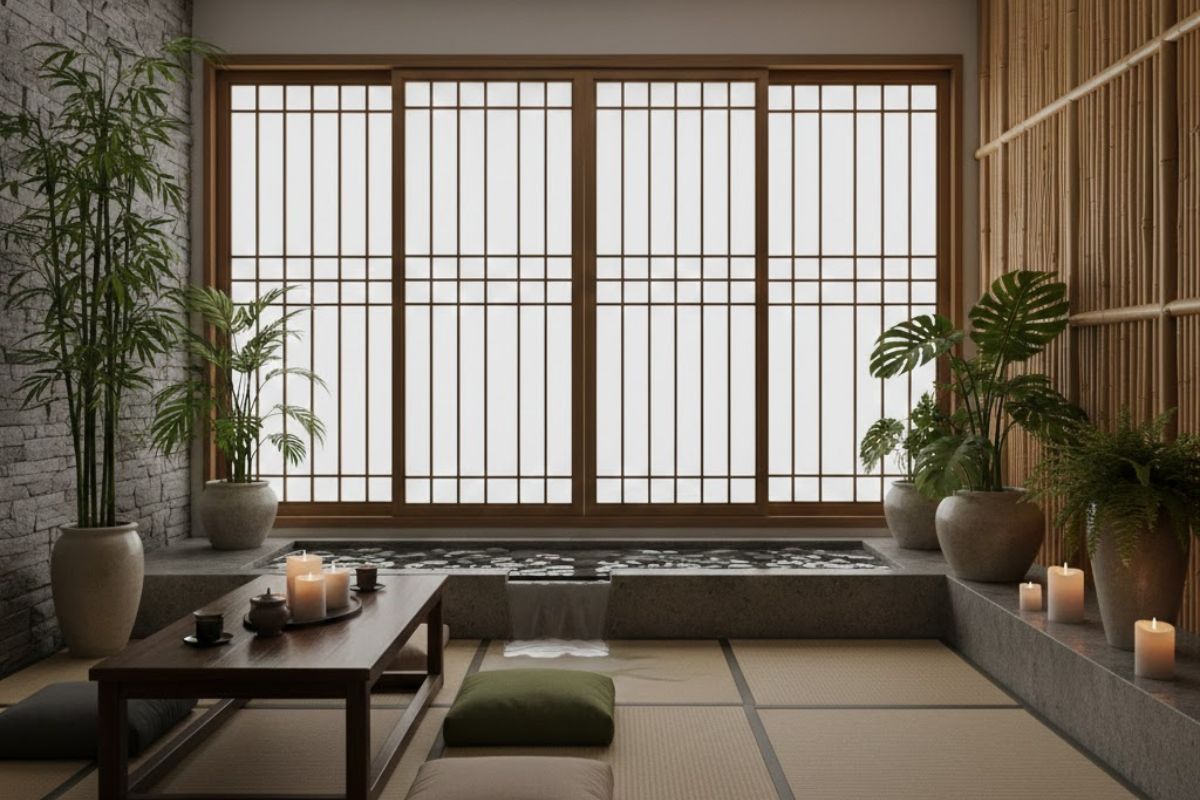
- Sliding doors (Shoji-style)
- Open walkways
- Wide windows
- Seamless indoor-outdoor transitions
This layout improves natural light flow and enhances calmness.
4. Indoor Plants for Life & Freshness
Plants are a key element of Asian Zen design because they represent growth, life, and balance.
Popular Zen plants include:
- Bonsai trees
- Bamboo plants
- Snake plants
- Money plants
- Peace lilies
- Areca palms
- Monstera
Plants add a refreshing visual element without overwhelming the design.
5. Zen Corners & Meditation Spaces
A Zen home often includes a small space dedicated to mindfulness and peace.
Your Zen corner can include:
- A floor cushion
- A bamboo mat
- A small wooden table
- Essential oils or candles
- A tabletop fountain
- A ceramic bowl
- A plant or bonsai
This becomes your space for meditation, reading, tea, or deep breathing.
6. Soft Textures for Comfort
Zen interiors are minimal, but never cold.
Soft textures help balance the simplicity. Use:
- Linen curtains
- Cotton throws
- Neutral rugs
- Cushioned seating
- Floor mats
- Woven baskets
They add warmth and create a comfortable, cozy feeling.
Asian Zen Interior Ideas for Every Room
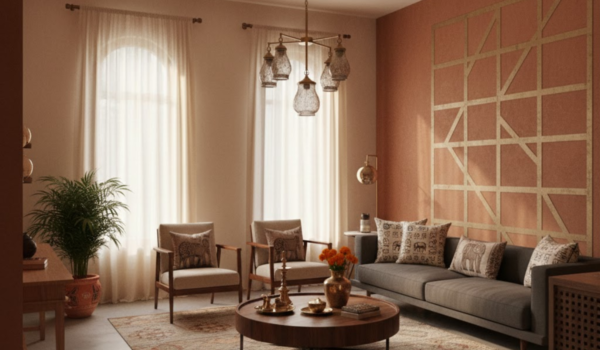
Living Room
- Use a neutral palette
- Choose low furniture
- Add indoor plants
- Use warm, soft lighting
- Keep décor minimal and meaningful
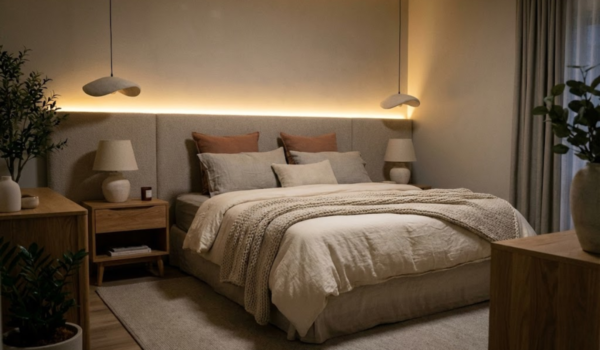
Bedroom
- Japanese-style platform bed
- Light wooden furniture
- Linen bedding
- Soft lighting and decluttered surfaces
Dining Area
- Wooden dining table
- Wooden dining table
- Simple ceramic dishes
- Bamboo or rattan chairs
- A centerpiece inspired by nature
Bathroom
- Stone finishes
- Wooden accents
- Indoor plants
- Spa-inspired layout
Why Choose Asian Zen Design for Your Home?
Here’s why the Zen style continues to be one of the most popular interior trends worldwide:
- Reduces stress & promotes calmness
- Improves mental clarity
- Creates a natural, grounding environment
- Supports minimal, clutter-free living
- Perfect for small homes and apartments
- Timeless and always in trend
Zen design is more than a style—it’s a lifestyle focused on peace, balance, and intentional living.